An Assault on the Bay: Pollution from Industry, Infrastructure, and Crisis

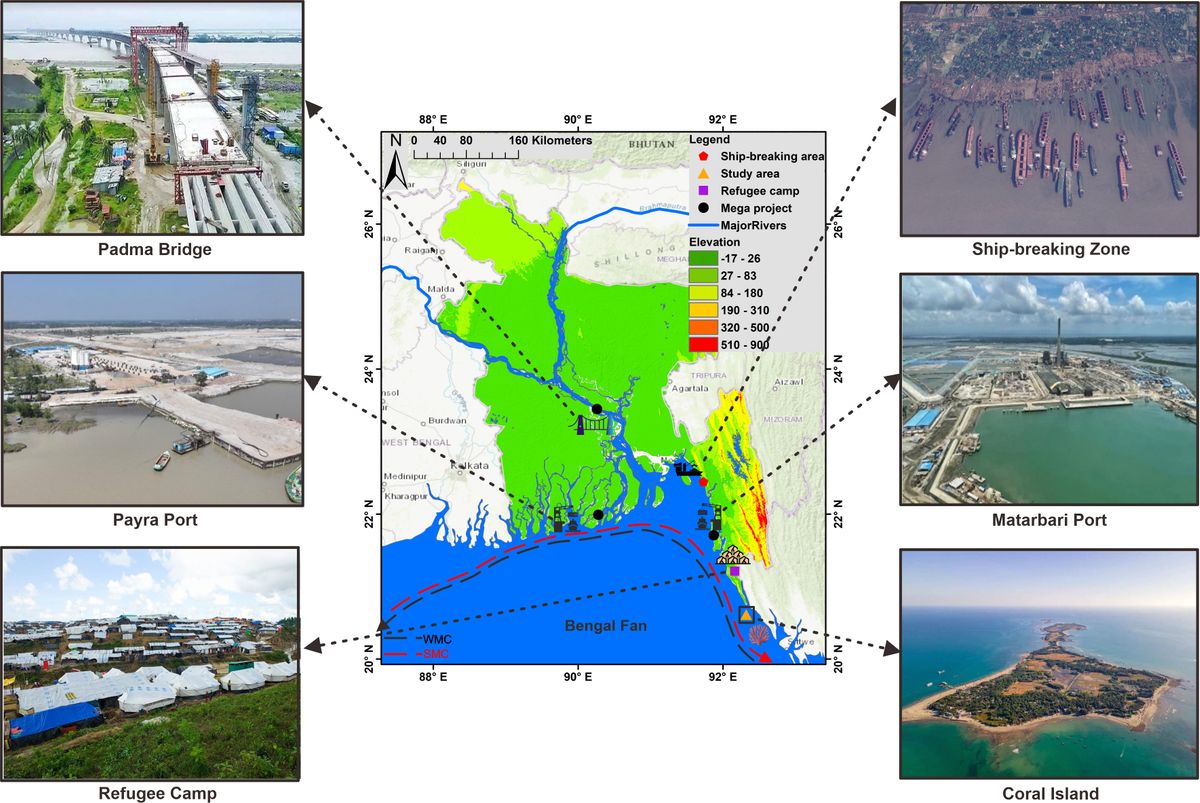
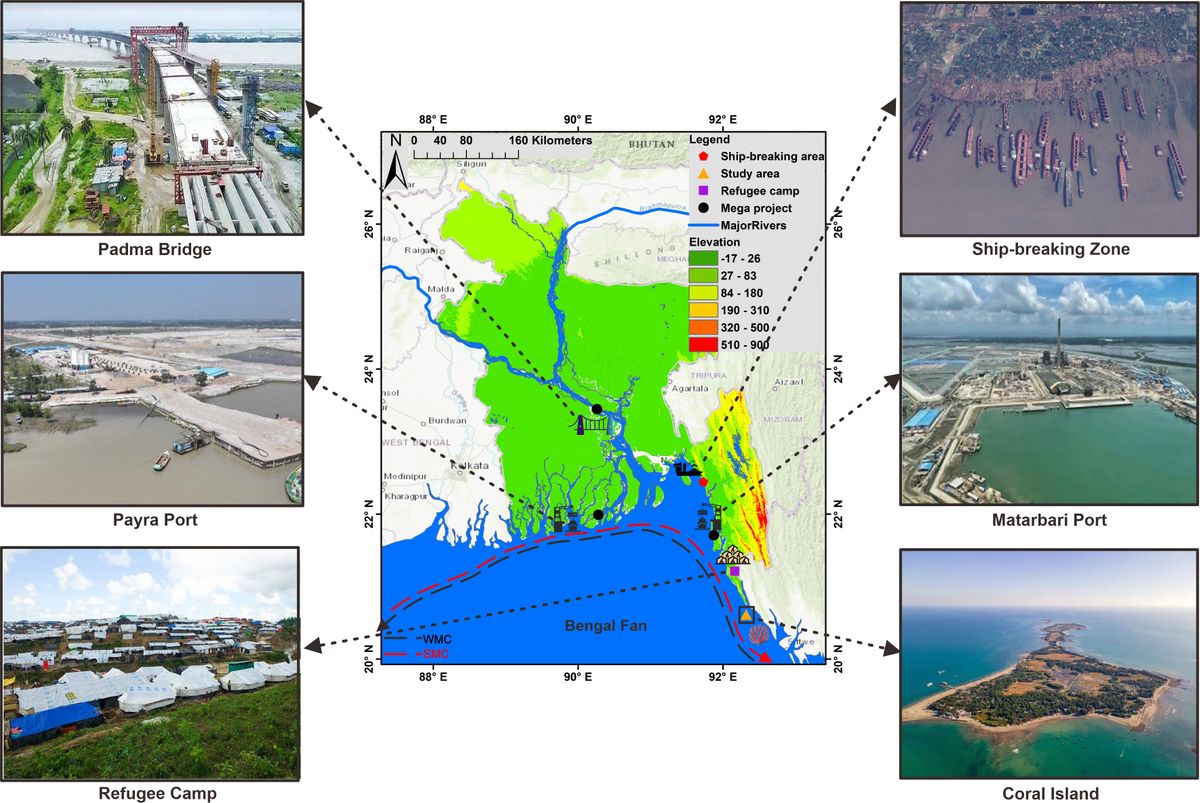
The rapid expansion of mega-projects and industries along Bangladesh's coast, coupled with the unprecedented humanitarian crisis of the Rohingya refugee camps, is imposing severe and lasting pollution on the Bay of Bengal's fragile ecosystem. The massive infrastructure projects, including the Padma Bridge and new deep-sea ports like Matarbari and Payra, generate significant construction runoff, sediment disruption, and increased marine traffic, leading to water turbidity and habitat destruction. Most critically, the ship-breaking yards of Sitakunda discharge a toxic cocktail of heavy metals—lead, mercury, and cadmium—asbestos, and oil directly into coastal waters, poisoning marine life and entering the food chain. Meanwhile, the densely populated refugee camps in Cox's Bazar, lacking adequate waste management, produce thousands of tons of untreated sewage and solid waste daily, which flows into waterways and eventually the bay, causing nutrient pollution and disease outbreaks. This multi-source assault threatens the biodiversity of areas like Saint Martin's Coral Island, endangers fisheries that millions depend on for food and livelihood, and poses grave long-term risks to public health and regional ecological balance.
Research Images