Effect of ginger (Zingiber officinale) on health and immunity in fish: advances, mechanisms, and prospects for sustainable aquaculture

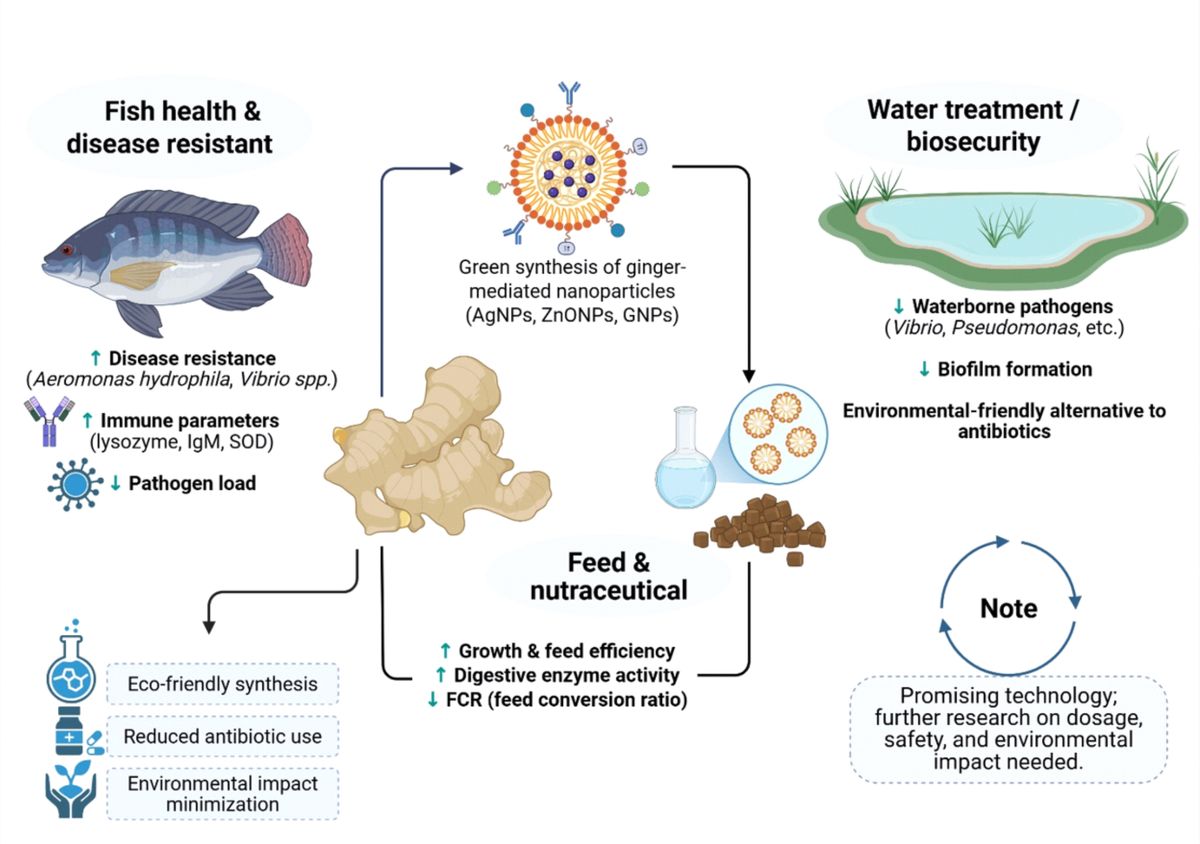
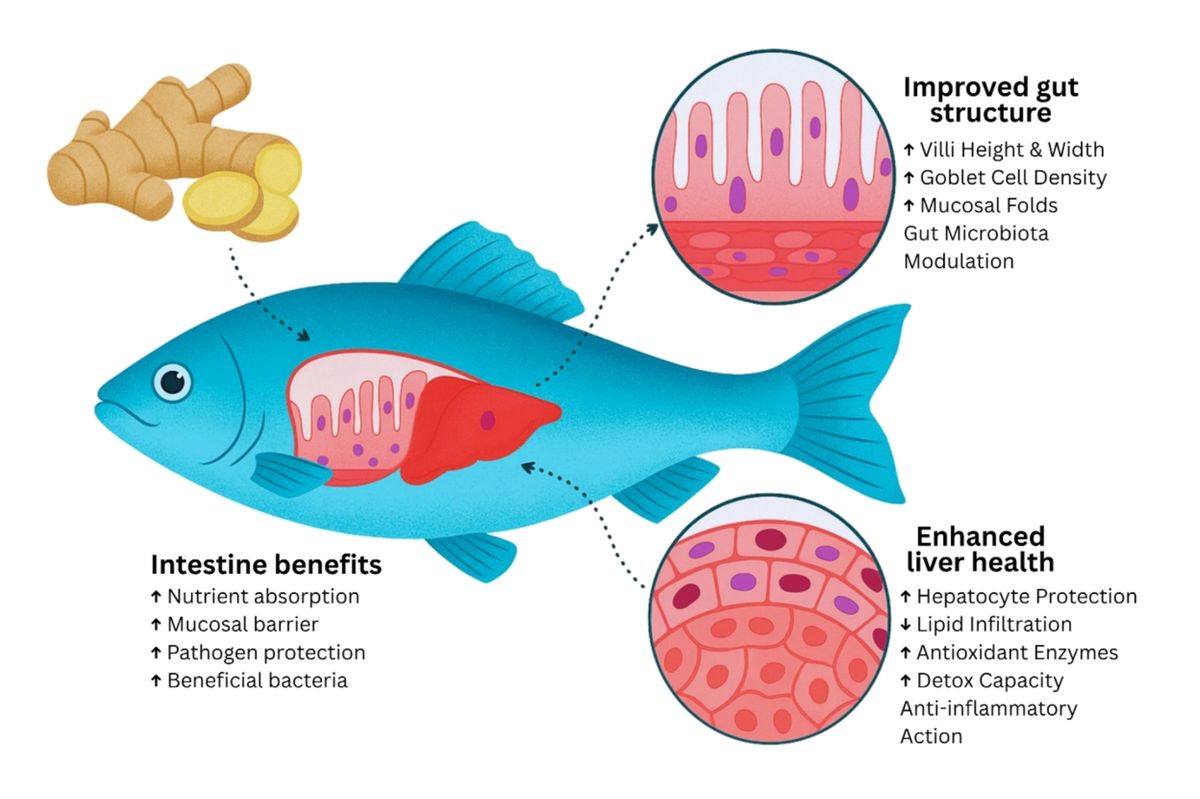
The intensification of aquaculture demands safe, sustainable, and effective alternatives to antibiotics for maintaining fish health and productivity. Ginger (Zingiber officinale), a medicinal plant rich in bioactive compounds such as gingerols, shogaols, and zingerone, has gained prominence as a functional feed additive in aquaculture. This comprehensive review synthesizes current advances in the application of ginger and its derivatives (powder, extracts, essential oils, and nanoparticles) for enhancing growth performance, feed utilization, immune modulation, antioxidant capacity, gut and liver morphology, and disease resistance in diverse fish species. Although several proposed molecular mechanisms require further fish-specific validation. The immunostimulatory and antioxidant effects of ginger are attributed to its phenolic constituents, which regulate key enzymes and modulate gene expression pathways involved in oxidative stress and immune defense. Ginger also enhances intestinal structure, enzymatic digestion, and resistance to common pathogens such as Aeromonas hydrophila and Vibrio spp. Moreover, ginger-mediated nanoparticles demonstrate significant antimicrobial activity and represent an emerging green approach to disease control. Despite promising outcomes, challenges remain regarding standardization, dosing strategies, molecular mechanisms, and field validation. This review proposes ginger as a promising phytobiotic candidate with multifunctional benefits and highlights its prospects as an eco-friendly tool for sustainable aquaculture.
Research Images